





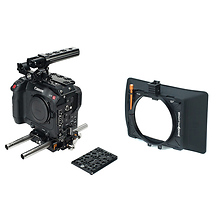

Matte Boxes and Hoods for Cinema and Video Rigs
A matte box does two jobs at once. It shades the front element from light that would otherwise wash contrast out of the image, and it holds filters in front of the lens in a repeatable, tool free way. Samy's Camera carries matte boxes and hoods from ARRI, Bright Tangerine, Tilta, SmallRig, Tiffen, and Kondor Blue, built for everything from a compact gimbal build to a full studio cinema rig.
Flare is the problem a matte box was invented to solve. Light striking the front element from outside the frame scatters inside the lens and lifts black levels across the whole image, and no amount of grading fully recovers what that veiling haze took away. A hood or matte box blocks that light before it ever reaches the glass, and adjustable French flags let you cut a specific source without intruding into the frameinto frame.
The second job is filtration. Screw in filters have to be threaded on and off between setups and they stack awkwardly. A matte box holds square and rectangjjular filters in trays that slide in and out in seconds, which is why the format persists on any production where filters change from shot to shot.
Clip-On and Rod-Mounted Designs
Clip-on matte boxes clamp directly to the front of the lens, so nothing touches the camera body and the whole assembly comes off with the lens. That keeps weight low and setup fast, which is why clip-on designs dominate handheld, gimbal, and drone work. Adapter rings and clamp adapters match the box to whatever front diameter the lens has, so one matte box serves an entire lens set.
Rod-mounted boxes attach to 15mm or 19mm support rods running under the camera. They carry more weight, support more filter stages, and put no load on the lens itself, which is the reason studio and long form builds still use them. Both designs accept the same filters.
Filter Trays and Stages
Stage count is the specification that decides how many filters you can run at once. A two stage box takes two filters, and one of those stages usually rotates so a polarizer or a graduated filter can be oriented independently. Three stage boxes add a third position for productions that layer filtration.
Tray sizing follows two common standards. The 4 x 5.65 inch rectangular format is the cinema default and gives graduated filters room to be positioned vertically. The 4 x 4 inch square format is lighter and works well on compact builds. Trays are sold separately from the box, so a rig can be expanded as the filter kit grows.
- Rotating trays for polarizers and graduated filters
- Fixed trays for neutral density and diffusion
- Clamp adapters and step rings for varied lens front diameters
- Top and side flags for cutting off axis light sources
- Variable neutral density systems built into the matte box itself
Variable ND and Integrated Systems
Some matte boxes integrate a variable neutral density system directly into the housing, replacing a tray full of fixed density filters with a single rotating assembly. For run and gun documentary and event work where the light changes between shots, that means holding a chosen aperture and shutter angle while exposure shifts around you. Fixed ND filters in trays remain the choice when absolute optical consistency matters across a controlled shoot.
Who Uses Matte Boxes
Narrative and commercial crews use full rod-mounted boxes with multiple stages, because filtration is planned into the look and the camera lives on a tripod or dolly. Documentary and corporate shooters lean toward lightweight clip-on boxes that come off quickly when the camera has to move.
Gimbal operators care about weight and balance above all, and the compact clip-on designs exist for exactly that reason. Photographers moving into video often start here as well, since a matte box paired with a solid filters kit is what makes shooting wide open in daylight practical.
Frequently Asked Questions
Do I need a matte box if my lens has a hood?
A lens hood shades the front element and nothing else. A matte box does that job with adjustable flags that can be set for the specific angle of your light source, and it adds filter trays. If you shoot with filters or work in strong backlight, the matte box earns its place.
What is the difference between 4 x 4 and 4 x 5.65 filters?
The 4 x 5.65 inch format is rectangular and is the cinema standard, with the extra height giving graduated filters room to be slid up or down. The 4 x 4 inch square format is lighter and takes up less space in the bag. Most matte boxes accept both with the correct tray.
Will a clip-on matte box fit all of my lenses?
It fits any lens you have the right adapter or clamp ring for. Clip-on boxes attach to the front diameter of the lens, so a set of adapters covering your common front sizes lets one matte box serve the whole kit.
Can I use a matte box on a mirrorless camera?
Yes. Lightweight clip-on matte boxes are designed with mirrorless bodies in mind, and they work well for hybrid shooters. For heavier rod-mounted boxes, plan on a proper cage and rod support to carry the weight off the lens mount.
Does a matte box affect image quality?
The box itself sits outside the optical path, so it changes nothing on its own. Image quality depends on the filters you put in it. Use quality optical glass, keep it clean, and store filters in a filter pouch or case so surfaces stay free of scratches.
How many stages do I actually need?
Two stages cover most working situations, with one rotating position for a polarizer and one fixed position for neutral density or diffusion. Three stages are worth it when you regularly layer diffusion on top of both.
Shop Matte Boxes and Hoods at Samy's Camera
Samy's Camera has supported working film and video crews since 1976. Browse matte boxes, hoods, trays, and clamp adapters online, or bring your camera and lenses into one of our store locations so we can confirm fit before you order.